
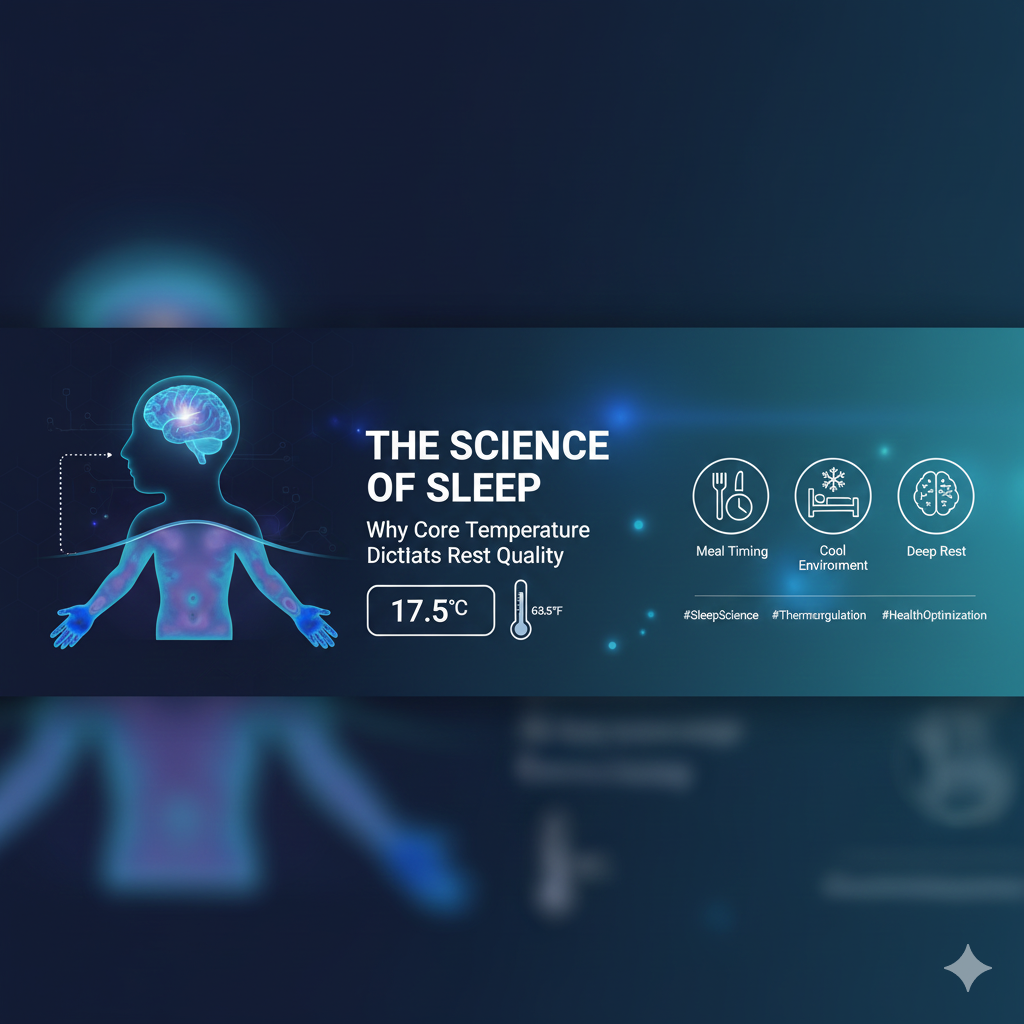
While we focus on light and caffeine, one of the most powerful biological drivers of sleep is thermoregulation. Understanding the link between your Core Body Temperature (CBT) and your circadian rhythm is the key to solving restless sleep.
The Circadian Decline and Sleep Onset
Distal Vasodilation: 2 hours before bed, your body begins moving heat from your core to your hands and feet
- The 1.2°C Threshold: For optimal sleep, your core temperature must drop by 1.2°C to 1.5°C.
- Melatonin production: This drop triggers the brain release melatonin- the sleep hormone. If you can’t lower the core temperature, you will not feel sleepy.
Postprandial Thermogenesis
Your metabolic state significantly affects your core temperature. Eating a large, calorie-dense meal in the evening initiates the thermic effect of food (TEF). Digestion generates internal metabolic heat. Research shows elevated core temperature reduces deep sleep and increases micro-arousal. Aim for a “thermal window” by finishing your last meal 3 hours before sleep.
Optimizing the Environment
Peer-reviewed studies suggest an ideal range of 60–67°F. Environments above 70°F are linked to decreased deep sleep.
Take a warm bath 90 mins before bed pulls blood to the skin’s surface. Once you exit, rapid evaporation causes a “rebound” cooling effect that accelerates sleep onset. Use natural fibers cotton and linen to prevent humidity from trapping heat against your skin.
The Bottom Line
Quality sleep is a thermodynamic process. By managing core temperature and optimizing your environment, you can achieve a better sleep quality.
Do you prioritize a cool room or specific bedding? Let’s discuss the science below!
#SleepScience #Biohacking #HealthOptimization #SleepHygiene #Thermoregulation